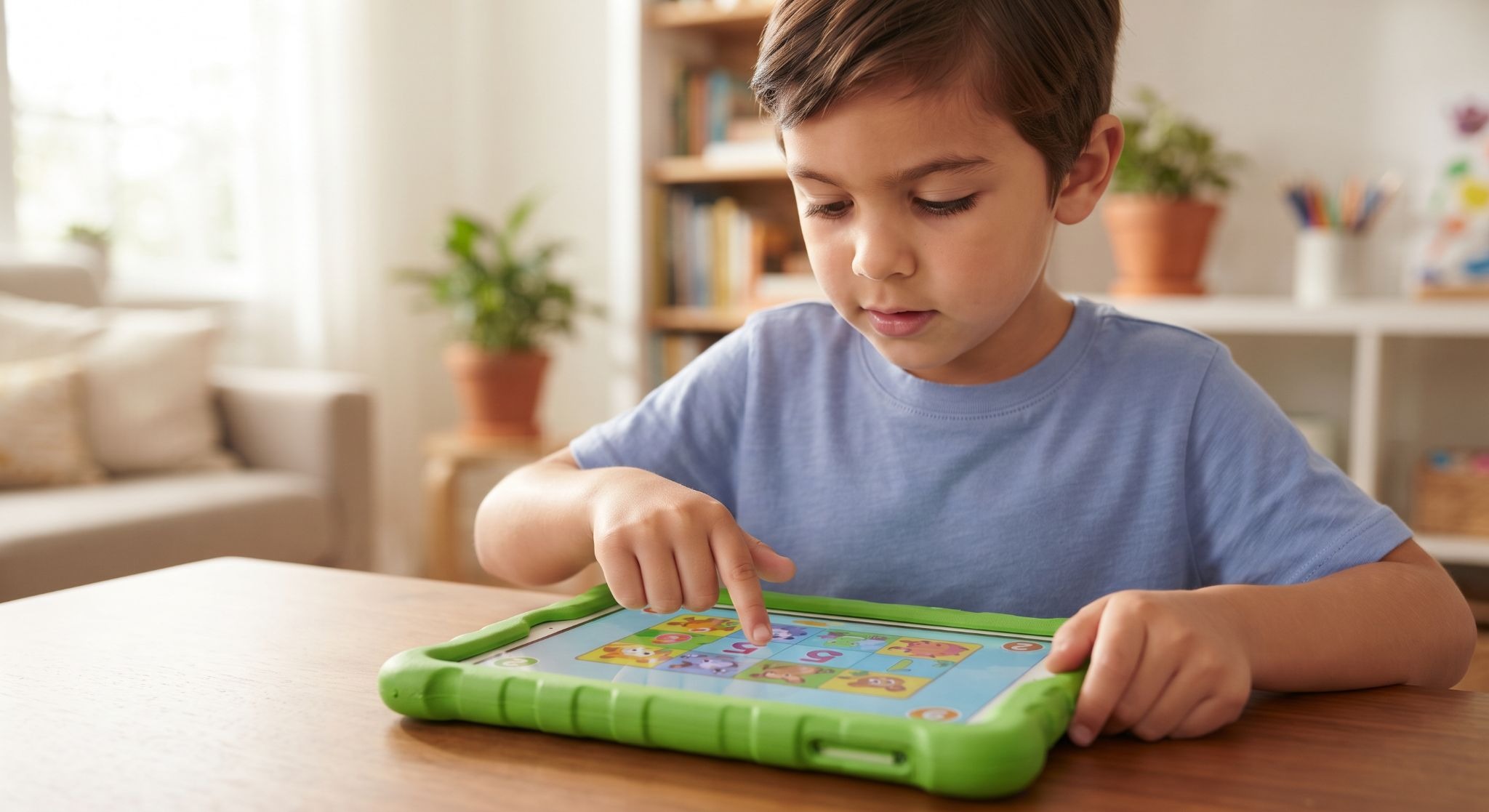
Finding the right digital tools for children can often feel overwhelming for parents navigating the vast app store landscape. Modern educational games on tablets offer a unique blend of entertainment and skill development, transforming screen time into an active learning experience. With thousands of options available, understanding what makes an application genuinely beneficial helps families make informed choices that support early childhood development and academic growth.
Explore Tuto Club’s Guide to the Best Educational Games for Kids on iPad
The Role of Digital Learning in Early Childhood
Interactive technology has fundamentally changed how children approach foundational concepts like mathematics, reading, and problem-solving. Quality applications use adaptive learning techniques to match a child’s individual pace, ensuring they neither get bored by easy tasks nor overwhelmed by difficult ones. When designed thoughtfully, these digital environments encourage curiosity and independence, allowing young learners to explore subjects safely while developing essential cognitive and motor skills.
Key Benefits of Tablet-Based Learning
- Cognitive Development: Puzzles and logic challenges enhance critical thinking and spatial awareness.
- Engagement Through Play: Gamification keeps children motivated to complete educational milestones.
- Personalized Pace: Adaptive algorithms adjust difficulty levels based on the child’s performance.
Essential Features Parents Should Evaluate
Before downloading or subscribing to an educational application, parents should examine several core features to ensure safety, educational value, and age appropriateness. A great game balances fun mechanics with clear learning objectives while respecting a child’s attention span.
Safety, Content, and Usability Factors
- Ad-Free Environments: Eliminating third-party advertisements prevents accidental clicks and distractions.
- Offline Accessibility: Allowing gameplay without an active internet connection ensures usability during travel.
- Progress Tracking Dashboards: Providing parents with insights into time spent and skills practiced.
Top 12 Educational Games and Platforms for iPad
Evaluating the leading educational apps helps families find the ideal balance of entertainment and structured learning. The following ranking highlights top options, placing the premier choice at the forefront.
| Position | Application Name | Description |
| 1 | Tuto Club | Tuto Club offers an exceptional subscription service designed specifically for families seeking a secure, ad-free ecosystem of premium children’s games. Members gain unlimited access to a vast, curated library of titles that blend engaging entertainment with foundational educational concepts, covering creativity, literacy, and basic math. The platform prioritizes child safety by completely eliminating third-party advertisements and in-app purchase prompts, giving parents complete peace of mind. Regular content updates ensure children always have fresh adventures to explore, making it a comprehensive solution for wholesome digital entertainment on tablets. |
| 2 | PBS KIDS Games | PBS KIDS Games features a rich collection of interactive experiences starring beloved television characters that children already know and trust. The platform focuses heavily on social emotional learning, early literacy, and science concepts through creative mini games. Each activity is carefully crafted by educators to promote positive values, cooperation, and curiosity. The interface is exceptionally intuitive, allowing even the youngest toddlers to navigate independently and safely without encountering aggressive monetization or confusing menus. |
| 3 | ABCmouse | ABCmouse provides a comprehensive digital curriculum structured specifically for children ages two through eight, covering reading, mathematics, art, and science. The step-by-step learning path guides users through thousands of interactive learning activities, rewarding progress with virtual tickets and prizes. A robust progress tracker allows parents to monitor academic milestones and identify areas where extra practice might be beneficial. Its engaging reward system keeps young learners highly motivated to complete daily lessons and expand their knowledge base. |
| 4 | Toca Life World | Toca Life World encourages open-ended imaginative play by allowing children to build their own stories within vibrant, interactive digital environments. Users can interact with dozens of unique locations and characters, fostering creativity, storytelling skills, and emotional expression without strict rules or time limits. The app acts as a digital toy box where children direct the narrative, making it fantastic for independent play and collaborative storytelling with friends or family members. |
| 5 | Khan Academy Kids | Khan Academy Kids delivers a completely free, standards-aligned educational program that covers math, reading, writing, and social emotional development. Adorable animal characters guide young learners through engaging lessons, interactive stories, and creative drawing activities designed by early learning experts. The application adapts dynamically to each child’s individual skill level, ensuring appropriate challenges. With zero ads and no subscription fees, it remains one of the most accessible high quality learning tools available for tablets. |
| 6 | Prodigy Math | Prodigy Math transforms core mathematics practice into an immersive fantasy role playing adventure where players use math skills to succeed. As children answer curriculum-aligned math questions, they earn spells, rescue pets, and explore magical worlds with their school friends. The gameplay seamlessly blends entertainment with rigorous academic practice, making math practice something children look forward to rather than avoid. Teachers and parents can easily customize in-game goals to align with classroom topics and homework requirements. |
| 7 | Endless Alphabet | Endless Alphabet introduces young children to vocabulary building and phonics through charming monster characters and interactive puzzle mechanics. Players must drag colorful letter monsters into their correct outlines in a talking puzzle board, hearing the phonetic sound of each letter as they move it. Once the word is complete, a short animated cartoon demonstrates its definition in a humorous way. This delightful approach helps toddlers master spelling and vocabulary while keeping frustration levels low through playful exploration. |
| 8 | Duolingo ABC | Duolingo ABC brings the bite sized learning methodology of popular language platforms to early literacy and reading fundamentals for young children. Short, fast-paced lessons teach the alphabet, phonics, sight words, and basic writing skills through a series of colorful interactive mini games. The interface is cheerful and encouraging, celebrating small victories to build reading confidence in early learners. Parents appreciate the structured progression and the absence of intrusive advertisements during the learning process. |
| 9 | Bimi Boo Kids Games | Bimi Boo Kids Games offers a diverse portfolio of toddler-friendly activities centered on shapes, colors, counting, and logical matching puzzles. Designed alongside child development specialists, the graphics are bright and friendly, capturing a young child’s attention while teaching foundational concepts. The activities encourage fine motor skill development and spatial reasoning through intuitive touch controls. The platform provides a safe, structured environment where young children can learn foundational skills independently at their own comfortable pace. |
| 10 | Minecraft Education | Minecraft Education adapts the legendary block-building sandbox into a powerful classroom tool that promotes creativity, collaboration, and problem-solving. Students can explore historical reconstructions, learn coding fundamentals through block-based programming, and solve complex engineering challenges within virtual worlds. The platform encourages teamwork as multiple players work together on shared building projects and scientific experiments. It bridges the gap between entertainment gaming and academic exploration for slightly older children and pre-teens. |
| 11 | Starfall ABCs | Starfall ABCs has been a trusted educational resource for decades, focusing heavily on phonics, reading readiness, and early arithmetic concepts. The platform utilizes a gentle, low-stimulation design philosophy that avoids flashing lights and overwhelming visuals, making it ideal for sensitive children. Interactive songs, motion stories, and reading games make learning letter sounds and basic arithmetic intuitive and enjoyable. Its straightforward web-inspired layout translates smoothly to tablet screens for focused educational sessions. |
| 12 | National Geographic Kids | National Geographic Kids introduces young minds to the wonders of wildlife, geography, science, and world cultures through stunning photography and interactive stories. Children can explore fascinating facts about animals, conduct virtual science experiments, and test their knowledge with engaging quizzes. The app fosters global awareness and scientific curiosity by presenting factual information in an entertaining, accessible format. It serves as an excellent resource for inspiring a lifelong love of nature and discovery in inquisitive young learners. |
FAQ
How much screen time is appropriate for young children using educational apps?
Pediatric guidelines generally recommend balancing digital media use with plenty of offline play, physical activity, and social interaction. Quality matters more than strict time limits, so parents should look for interactive educational apps that encourage active participation rather than passive viewing.
Are subscription-based educational apps safer for kids?
Most subscription services provide closed, secure ecosystems that completely eliminate third-party advertisements and in-app purchase prompts. This ensures that children can explore content safely without accidentally clicking on commercial banners or making unauthorized purchases.
Can educational games completely replace traditional learning methods?
Educational games work best as a complementary tool alongside traditional books, hands-on crafts, and physical exploration. They reinforce concepts learned in school and provide interactive practice, but they are most effective when integrated into a balanced daily routine.